Big Bass Splash mobile demo: 6 checks before play
The original Splash board and its help belong together. Start with the client state, check the controls you need and use the nearby reading path when an element is unclear. This practice room keeps the exact game separate from device layout, theoretical calculations and a separate operator comparison.
18+ · Virtual credits only · Availability depends on the provider and your location.

On this page
- A practice room for the original Splash
- 6 checks before using the controls
- Portrait view: what must stay readable?
- Landscape view: repeat the same task
- Touch targets and unplanned actions
- Read the total stake before the result
- The help page is part of the practice room
- Follow one completed round as a reading exercise
- When the practice moves into free spins
- If the game does not reach a usable screen
- Theoretical inputs need their own label
- Compare operator access separately from the game
- Choose the right kind of mobile help
- 4 answers about phone practice
- Help stays close to the task
Open the provider’s practice game without leaving this guide. Close demo returns you to the same control.
A practice room for the original Splash
This page puts the original Big Bass Splash practice context first, with help close to the controls you may need. The starting question is simple: what state has the client reached? A page, a loading panel and a usable game are different states. Read any message before treating the area as ready for a round.
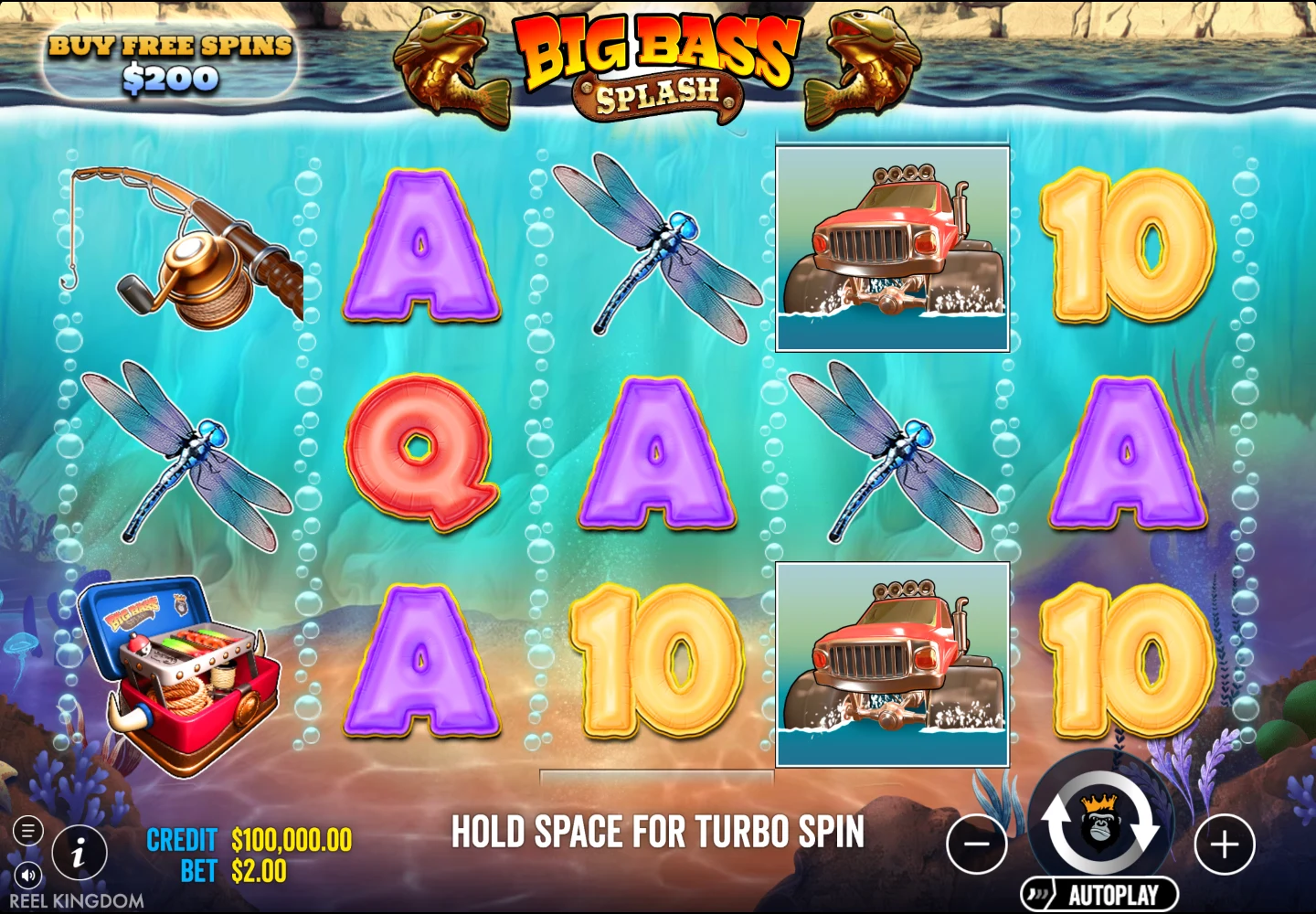
The learning material can still be useful when a live route is unavailable. Its authentic board and help captures describe an English demo with USD virtual credit, while native diagrams explain layout and sequence. They do not claim a current British cash session. Keep that distinction when comparing the images with the embedded route actually displays.

6 checks before using the controls
Find the complete game title before changing a setting. Then identify the virtual-credit context, the total stake display, the information control and the route back to this page. Finally check whether a message limits access in the present context. These checks turn an unfamiliar screen into a small set of understandable questions.
Make one change at a time. If several settings or orientations change together, it becomes harder to know which action produced the visible difference. The six checks are a reading routine rather than a strategy for winning. They require no account deposit and do not promise that every browser or location can use the same route.
Read the full title
Recognise virtual credit
Locate the total stake
Find the information control
Find the return route
Read any access message


Visit the casino ↗Advertisement · 18+ · Operator terms apply.
Portrait view: what must stay readable?
In portrait view, the surrounding page can be easy to read while the game board has less horizontal space. Look for the title and the current setting rather than judging the layout only by the size of the reels. If a label is too small or a control is covered, identify that specific element. A general impression that the game looks compact is less useful.
Open help as a separate reading task. Before scrolling, locate its close control and understand how to move between information pages. A help panel that appears successfully may still contain clipped text. The schematic portrait illustration shows functional zones, not a photograph of an untested handset or proof of access in Great Britain.

Landscape view: repeat the same task
Rotate the device only after you know which element you are checking. A wider board may make symbols easier to see, but a shorter screen can leave another control near the edge. Repeat the portrait checks with the same title, stake display and help function. That creates a meaningful comparison of orientations rather than a comparison of unrelated scenes.
When you return to portrait view, confirm that the client remains in the expected state. A reload or a new message changes the observation. Do not describe a layout as universally better because one image occupies more space. The table keeps the task constant while the available screen shape changes.
| Portrait | Read title,stake,help and return route |
| Landscape | Read the same four elements after rotation |

Touch targets and unplanned actions
A finger covers part of the screen when you touch a small control. Read the label and its nearby setting before acting. If two controls sit close together, slow down and confirm which one changed. An interface animation should not be used as the only evidence that you selected the intended function.
After opening a menu, check whether the page behind it is still the right context. Close the menu with its own control and verify the return point. These small habits make the interface easier to understand. They do not alter the chance of a game result, and they should not be presented as performance findings from a handset that has not been tested.

Read the total stake before the result
A stake setting, a virtual balance and a result display answer different questions. The stake indicates the current input to a round; the balance belongs to the current mode; the result belongs to a completed event. Read the labels together instead of assigning meaning from colour or position. The existing capture uses USD amounts, so its figures are not silently converted into a British account example.
If you change the stake in a demo, re-read the paytable context as well. A displayed amount can depend on the current base. This page does not copy those capture-specific payout figures into a universal symbol table. Its explanatory map shows the relationship between setting and information without inventing values for another client configuration.

The help page is part of the practice room
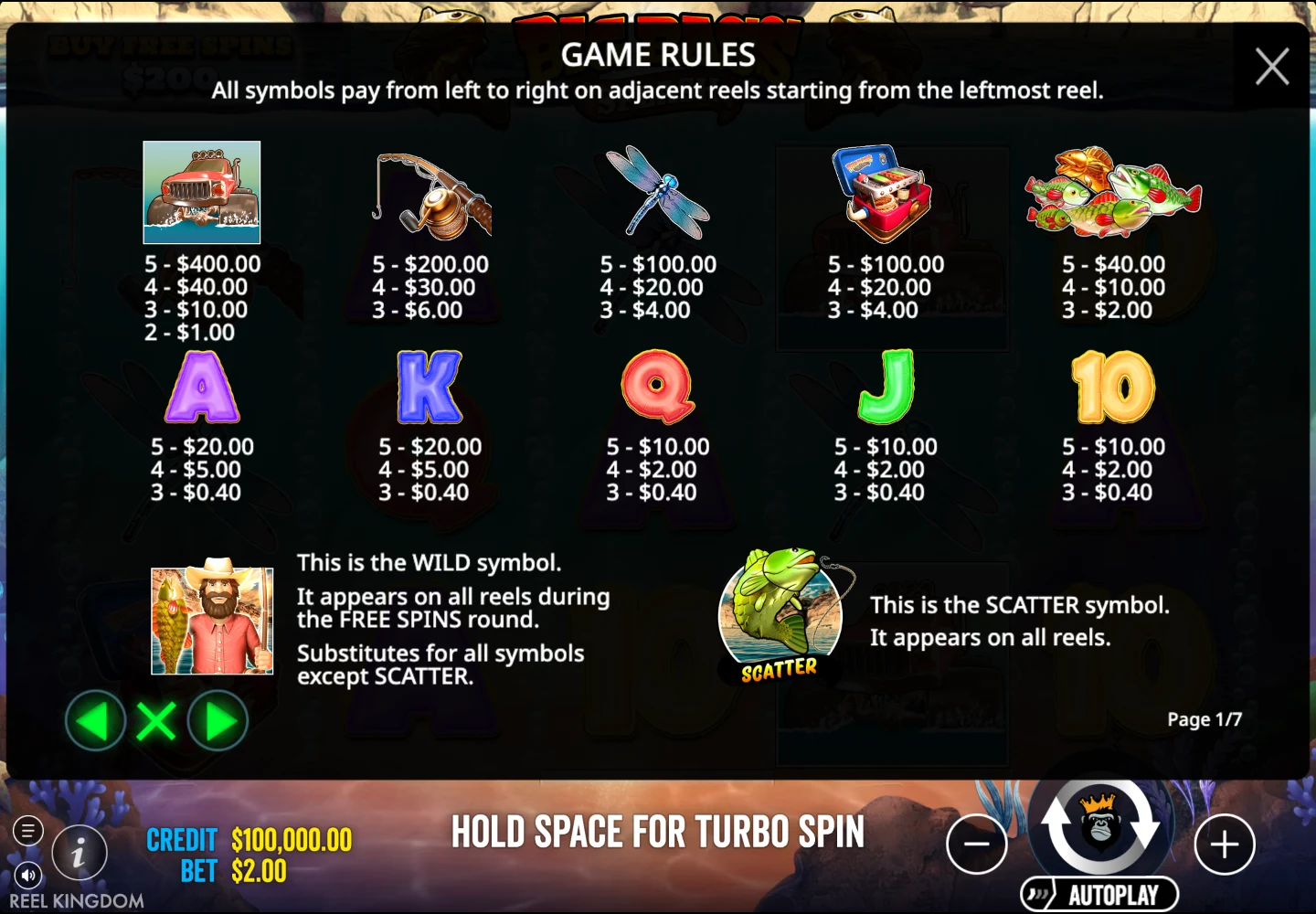
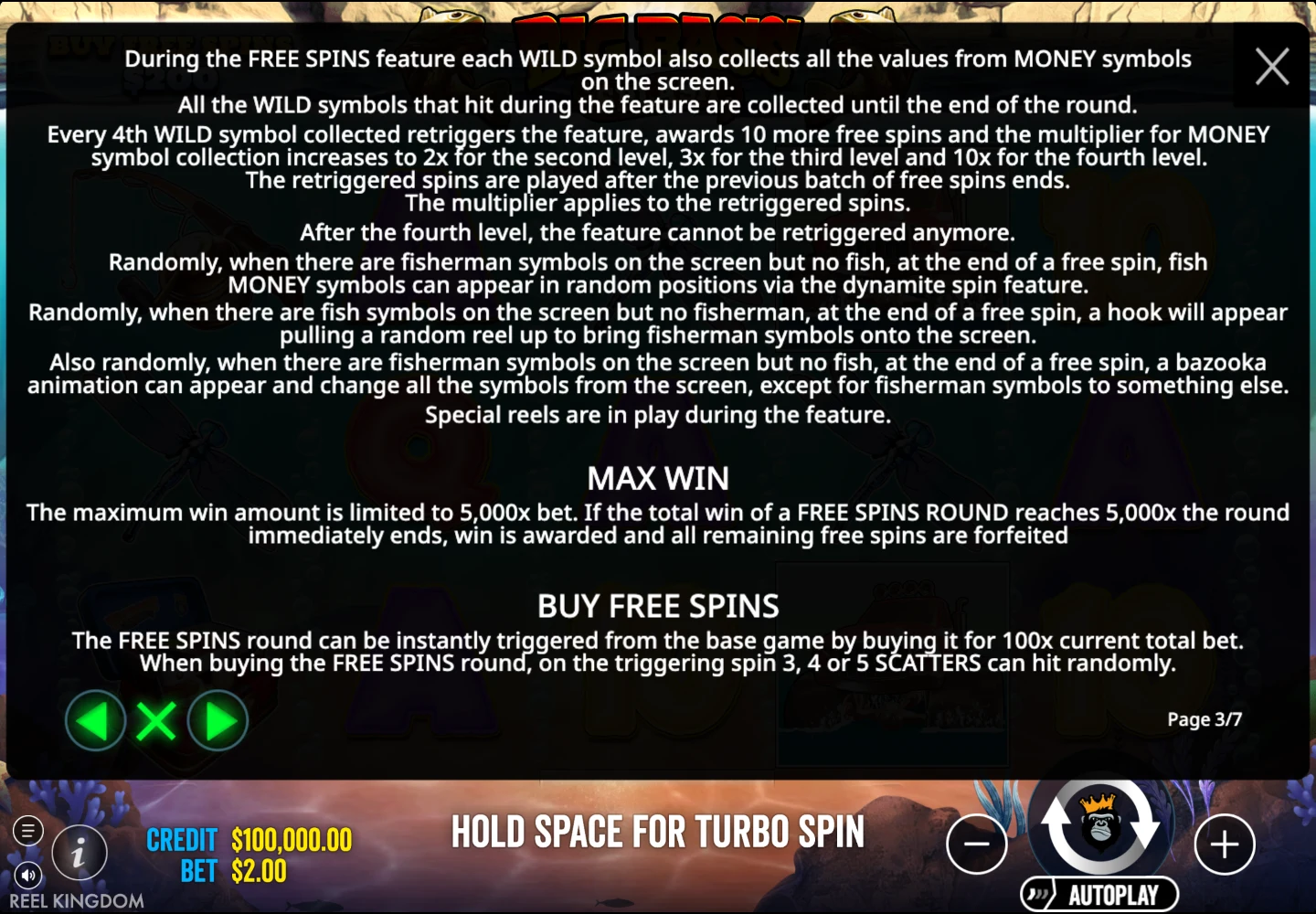
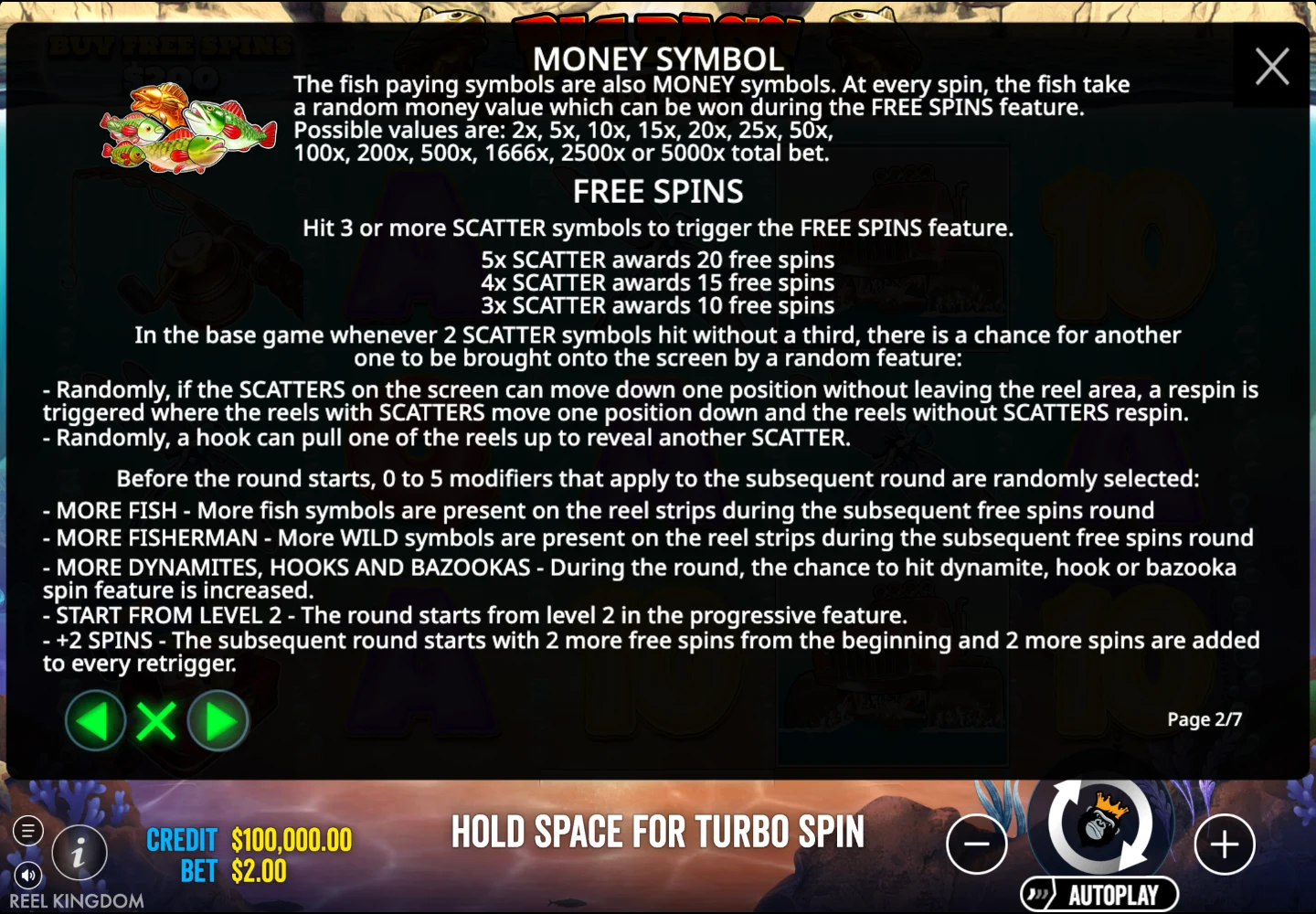
The authentic help capture shows ordinary paying symbols and separate feature roles in the original Splash client. It is useful beside the board because you can identify what a picture means without guessing from its size. The fisherman wild and scatter receive explanations of their own; they are not simply two more ordinary pictures in the same list.
Keep the capture’s language, currency and stake context visible. Other information pages or configurations may present additional details. A single help image is not a complete substitute for the active client’s rules. The nearby diagrams explain categories and reading order, while the image remains evidence of the specific captured page.

Follow one completed round as a reading exercise
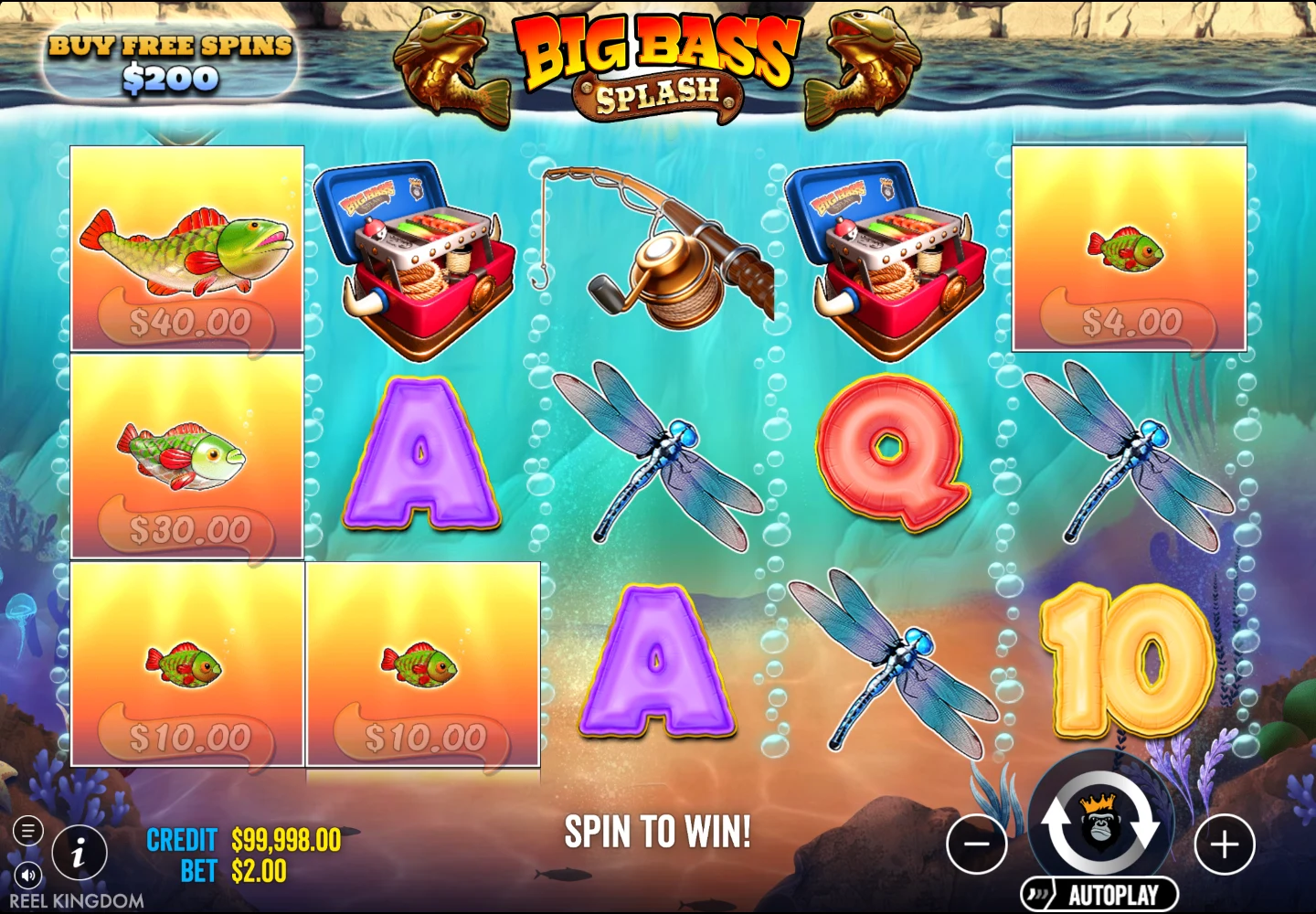
A reading exercise separates the state before a round, the presentation of the result and the final display. Beforehand you recognise the setting; afterward you wait for the presentation to finish and inspect the recorded result. This does not require a favourable outcome. It is a way to understand the client without turning a brief sequence into a forecast.
If a feature opens, the context changes and its own explanation becomes relevant. If the client reloads, do not assume continuity with the previous screen. The timeline on this page is conceptual and contains no fabricated sequence of wins. It helps name the state you are observing so that a question about controls is not confused with a question about the game rules.

When the practice moves into free spins
The official original-Splash overview gives different initial free-spin awards for three, four and five qualifying scatters. It also describes money collection alongside wilds and possible modifiers before the feature. The practical task is to notice that the game has entered a different state, then read its counters and explanation in that context.
You do not need to wait for the feature to learn where the help is. Read the relevant information first if the mechanics are unfamiliar. A short demo without a bonus does not establish its frequency, and a single bonus does not reveal an expected personal return. The feature notes explain which questions to ask of the active client.

Visit the casino ↗Advertisement · 18+ · Operator terms apply.
If the game does not reach a usable screen
Describe the furthest state reached: surrounding page, empty container, loading view, access message or game board. Each one suggests a different information question. A geographic message should be read as a restriction of the current route, not relabelled as a successful game test. This page does not advise bypassing it.
For a technical question, include the full title, the device orientation and the visible message. Avoid sending passwords or personal account details as part of a general description. Repeating an action without reading its response can make the state less clear. One precise observation is a better starting point than a claim that every part of the service has failed.
Name the furthest visible state
Read the message literally
Keep the full title in the question
Separate access from layout

Theoretical inputs need their own label
The expectation example requires a stake, a number of rounds and a configuration parameter supplied by the reader. Its formula illustrates a long-run mathematical reference. It does not automatically fill in a Splash RTP from a different site, nor does it estimate the outcome of your next practice visit. Without the parameter, no numerical result is produced.
A result from this calculation is different from a sample return ratio. One comes from selected theoretical inputs; the other describes observed totals. Neither determines a next spin. The separate labels make the distinction easier to understand while keeping a configuration that has not been verified as unknown.
Understand selected theoretical inputs

Compare operator access separately from the game
An operator comparison begins after the original game has been identified. The comparison needs the exact title, the product available to the target market and a documented mobile route. A fishing logo or a generic slot category does not confirm those details. Payments and offer conditions also belong to the operator rather than to the game’s own feature rules.
The neutral selector contains no invented operators in this comparison. If verified entries are added later, selection would merely choose a card to read. It would not rank their probability of producing a winning round. The comparison fields remain separate: operator, exact game, mobile access, payment conditions, source and date.
| Game identity | Does the complete title match original Splash? |
| Mobile route | What was actually accessed and in which context? |
| Conditions | Which current operator source explains them? |
Choose a documented comparison card

Read the operator comparison checklist ↗
Visit the casino ↗Advertisement · 18+ · Operator terms apply.
Choose the right kind of mobile help
The learning questions distinguish a loading problem, a hidden control and a rule question. Their answers lead to different parts of this practice room. If the board has not appeared, a symbol explanation does not fix that state. If a help panel is clipped, a new family title is not the relevant comparison.
After each answer you can read why that path fits the observation. This is a comprehension check, not a rating of the player or a promise that a device problem is solved. It helps you formulate a precise question and choose the related information without creating an unnecessary account or money-play step.
Find the relevant phone-help path

4 answers about phone practice
These answers concern navigation, interpretation and the difference between a calculation and an actual game. They do not claim a live test of every route.
Does landscape mode automatically solve mobile problems?
No. Compare the same elements after rotation. A wider board can improve one area while a shorter viewport clips another. The relevant observation is whether the particular task remains readable and controllable.
What should I report if nothing loads?
Name the furthest state and quote the visible message in your own description. A page, a container, a geographic notice and an actual game board are different outcomes.
Why do the screenshots show USD?
They retain the context of the English original-Splash demo capture. They are not relabelled as a GBP cash account and do not prove the location of a new visitor.
Can the expectation calculation predict a practice session?
No. It explains selected mathematical inputs and a long-run reference. The next session can differ substantially; the calculation does not verify a client configuration or access route.
Help stays close to the task
The mobile-help page deepens the same questions rather than switching to an unrelated review. It keeps access states, orientation, controls and rule reading separate. When you have identified the unclear element, open the corresponding explanation and return to the practice context. If the route is unavailable, the reading material can still answer conceptual questions without pretending to be a playable client.
You can finish after understanding the screen. A practice room does not need to turn every visitor into a money-play transition. The useful outcome is a clearer description of title, controls and state. That also makes any later operator comparison more precise, because the game identity and the mobile task have already been separated.
Visit the casino ↗Advertisement · 18+ · Operator terms apply.